
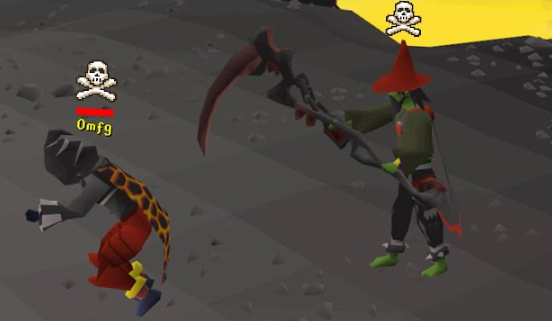
OSRS: How to Get Scythe of Vitur

The Scythe of Vitur is one of the most iconic and powerful melee weapons in Old School RuneScape. Known for its incredible multi-hit damage and dominance in endgame PvM, it remains a top-tier goal for serious players. However, obtaining and maintaining this weapon is no small feat.

In this guide, we’ll break down how to get the Scythe of Vitur (uncharged), its drop rates, alternative ways to acquire it, and whether it’s worth the massive investment. We’ll also explore how players use OSRS gold to accelerate their journey toward this prestigious weapon.

How to Get the Scythe of Vitur (Uncharged)

1. Complete Theatre of Blood Runs

The primary way to obtain the Scythe of Vitur is through the Theatre of Blood (ToB), one of the most challenging raids in OSRS.

After defeating Verzik Vitur, players receive rewards from a completion chest. However:

·Only one unique item drops per raid

·The Scythe of Vitur is the rarest item on the loot table

·Rewards are distributed among team members

This means even if your team gets a unique drop, there’s no guarantee it will be the Scythe-or that it will go to you.

2. Understand the Drop Rate

The Scythe of Vitur has an estimated drop rate of around 1 in 650 raids in standard mode.

Your chances depend on several factors:

·Team size

·Individual contribution

·Total number of completions

Because loot is shared among teammates, even experienced players may go hundreds of runs without receiving a Scythe. This rarity is what makes it such a prestigious and valuable item in the game.

3. Survive and Perform Well

While ToB rewards are largely RNG-based, performance still matters.

To maximize your chances:

·Avoid deaths during encounters

·Maintain consistent damage output

·Learn mechanics to improve efficiency

Deaths not only slow down your team but can also reduce your contribution, which may impact your eligibility for unique rewards. Consistency is key when grinding for rare items like the Scythe.

Buying the Scythe of Vitur Instead

For many players, completing hundreds of Theatre of Blood runs simply isn’t realistic. Fortunately, there’s an alternative: purchasing the Scythe of Vitur from the Grand Exchange.

Market Value

·Typically costs billions of GP

·Price fluctuates based on supply and demand

Because of its high cost, acquiring the Scythe through gold alone requires a massive amount of OSRS gold.

Faster Ways to Afford It

Players generally fund their purchase through:

·High-level bossing

·Raids and PvM farming

·Flipping items on the Grand Exchange

However, these methods can take hundreds of hours. As a result, some players choose to buy OSRS gold through trusted marketplaces to speed up the process.

This allows players to:

·Skip long grinding sessions

·Access endgame gear faster

·Focus on high-level content immediately

If you choose this route, it’s important to prioritize safety and reliability when selecting a service.

Charging the Scythe of Vitur

Once you obtain the uncharged Scythe, it must be powered using blood runes to function.

How It Works

·Charges are added by using blood runes on the weapon

·Each attack consumes charges

·Maintenance costs can be very high

Because of this, the Scythe is one of the most expensive weapons to use in OSRS.

When to Use It

To maximize efficiency, the Scythe should be used in:

·High-profit bossing

·Raids like Theatre of Blood

·Endgame PvM encounters

Using it in low-value activities, such as casual Slayer, is generally not cost-effective due to the high upkeep cost.

Where the Scythe Excels

The Scythe of Vitur is especially powerful against large enemies, thanks to its multi-hit mechanic.

Best Use Cases

·Theatre of Blood

·Chambers of Xeric (select bosses)

·Corporeal Beast

·Nex

·Large hitbox monsters

In these scenarios, the Scythe delivers unmatched DPS, making it one of the best weapons for maximizing efficiency and profit.

Is the Scythe of Vitur Worth It?

Worth It For:

·Endgame PvM players

·Dedicated raiders

·Players with strong GP income

Less Ideal For:

·Mid-level accounts

·Casual players

·Those without sustainable income

While owning the Scythe is impressive, its true value comes from using it effectively in the right content. Without a steady income, the cost of maintaining it can outweigh its benefits.

Managing Costs and Maximizing Value

Because the Scythe is expensive to use, efficiency is critical.

Tips

·Use it only in high-return activities

·Track supply costs versus profits

·Optimize your gear setup

By doing so, you can offset the cost of blood runes and continue growing your OSRS gold reserves over time.

Final Thoughts

The Scythe of Vitur represents the pinnacle of melee power in Old School RuneScape. Its rarity, cost, and performance make it one of the most sought-after items in the game.

Whether you grind Theatre of Blood or purchase it outright, obtaining the Scythe is a major milestone. For players looking to reach that level faster, choosing to buy OSRS gold responsibly can help bridge the gap between time investment and endgame readiness.

Ultimately, the Scythe isn’t just a weapon-it’s a symbol of dedication, skill, and success in OSRS’s most challenging content.

Old School RuneScape New Bosses:Ober and Briafa Break Free From Keys

In a major quality-of-life and content update, Old School RuneScape has reworked two of its most mysterious wilderness and high-risk bosses:Ober, the spirit-bound hunter of the deep woods, and Briafa, the fungal witch of the swamps. Once locked behind time-gated keys and complicated access mechanics, both bosses have now been reintroduced with permanent keyless access, revamped loot tables, and new mechanics aimed at rewarding both risk-takers and solo PvMers alike.

Before the update, fighting Ober or Briafa required obtaining boss-specific keys-a system that was both tedious and time-consuming. Players often had to grind for hours just to get a single chance at these bosses, and the loot didn’t always justify the effort. Worse, if you died mid-run, those keys were lost entirely.

With the new update, both bosses have been moved to their own permanent arenas, accessible directly through marked entrances in their respective biomes:Ober in the Haunted Uplands (northern Morytania), and Briafa in the Poisonfen Grove (south of Mort Myre Swamp). Players can now enter these arenas without keys, at any time, and respawn the bosses without external item requirements.

Ober, the spirit-warped warden of the forest, remains a high-intensity melee-based boss. In the rework, his fight has been updated to feature scaling aggression, meaning the longer the battle drags on, the more violent and unpredictable his attacks become.

The arena itself is now split into three shifting terrain zones-mossy ground, exposed roots, and corrupted shadow patches. Ober behavior changes depending on where he stands:

On mossy ground, Ober uses crushing slams and regenerates health slowly.

On exposed roots, he becomes enraged and gains attack speed.

In shadow patches, he becomes partially invisible, dodging ranged attacks more easily.

This forces players to move smartly, use flinching tactics, or carefully manage attack styles depending on the terrain. High-level players with strong gear can brute-force the encounter, but skilled low-level players will find clever footwork equally rewarding.

If Ober is about aggression and brute force, Briafa is a boss of patience, poison, and positioning. Reworked as a ranged/magic hybrid, Briafa is now far more dynamic, with shifting attack patterns and phase-based mechanics.

During the fight, Briafa releases clouds of toxic spores, which mutate into either poison bulbs, which explode after a delay, or healing spores, which she will absorb to restore health unless intercepted. Players must interrupt her healing phases by standing on the spores, making positioning and quick movement crucial to success.

Briafa also summons fungal minions, which tether to her if not dealt with quickly. These tethers reduce incoming damage by up to 75%, meaning players must prioritize add control and manage their prayer carefully.

Her new fight loop is longer than Ober but provides a methodical and satisfying challenge for players who prefer strategy over raw DPS.

One of the best parts of the update is the new chest-based loot system that activates upon killing either boss. Instead of dropping loot directly, Ober and Briafa now unlock instanced reward chests within their respective arenas, similar to the Gauntlet or Theatre of Blood.

Each kill adds items to the chest based on:

Time to kill
Damage taken
Special mechanics avoided (e.g., interrupting Briafa’s spores or keeping Ober out of his shadow zone)
Number of kills in a row (killstreak bonus)

This system adds a mini scorecard feel to each fight, encouraging cleaner, smarter runs and rewarding consistency.

Ober Chest:

Warden Fang-A two-handed spear with bonus damage against corrupted and undead enemies. Special attack “Impale Root” stuns enemies and ignores protection prayers in PvP (balanced for Deadman and Bounty Worlds).

Cursed Antlers-A new best-in-slot melee helm with +3 Strength and passive damage reflection.

Forest Coins-A tradeable currency used to purchase recolors and supplies from a new shop in Mort’ton.OSRS gold is very important in the game. You need gold to upgrade or purchase items. If you need it, choose RSgoldfast to meet your cheap Runescape gold needs.

Briafa Chest:

Mycelial Wand-A magic weapon with a 1-tick special that spreads poison across multiple tiles. Poison builds now have a new best friend.

Sporecaller Robes-Hybrid gear with bonuses to magic and ranged accuracy, and poison immunity when worn as a full set.

Fungal Sliver-A rare tertiary drop used to upgrade specific weapons with poison-based effects.

Additionally, both bosses now have cosmetic pet variants, obtainable at a 1/2,000 drop rate, as well as unique music tracks, diary tasks, and lore entries.

This change also helps bridge the gap between casual PvM and endgame raids. For ironmen, it means new sources of high-tier gear and unlockables without needing to chase keys. For PvP players, Ober items bring new tools forthe wilds. And for everyone else, it’s just fun-pure, clean, OSRS-style bossing.Ober and Briafa are no longer locked behind gates-they’re unleashed.

Mastering Prayer Flicking in OSRS: A Comprehensive Guide

In Old School RuneScape, mastering combat mechanics can give players a significant edge in both PvE and PvP. One advanced technique that can drastically improve efficiency while conserving resources is known as prayer flicking. This method allows players to maximize prayer benefits while minimizing prayer point consumption, making it an invaluable skill for high-level encounters.

Prayer is a crucial combat mechanic in OSRS, offering benefits such as increased damage, protection from attacks, and even healing effects. However, every activated prayer consumes prayer points, which are finite and must be restored using altars, prayer potions, or other means. Without proper management, players can quickly run out of prayer points, leaving them vulnerable in combat.

Prayer flicking is a technique that allows players to optimize their prayer usage by toggling prayers on and off at precise moments. When done correctly, it enables players to:

Avoid unnecessary prayer drain

Extend the duration of prayer effects

Improve combat efficiency in prolonged fights

Prayer flicking revolves around the game tick system, where every action in OSRS occurs in 0.6-second intervals. The core principle of prayer flicking is to activate a prayer right before an attack lands and then deactivate it immediately after. This ensures the prayer effects apply without sustaining continuous prayer point drain.

Example: Flicking Protection Prayers

1.Activate Protect from Melee/Magic/Missiles right before an enemy attack lands.

2.Deactivate the prayer immediately after the attack registers.

3.Repeat the process for subsequent attacks to maintain protection while minimizing prayer consumption.

This technique is particularly useful against enemies with predictable attack patterns, such as bosses or NPC that attack on set intervals.

Example: Flicking Offensive Prayers

1.Activate Piety, Augury, or Rigour just before launching an attack.

2.Deactivate the prayer immediately after the hit lands to prevent further drain.

3.Repeat this cycle to maximize damage output while conserving prayer points.

Benefits of Prayer Flicking

  1. Conservation of Prayer Points

The most significant advantage of prayer flicking is extending the lifespan of your prayer points. By toggling prayers instead of leaving them on continuously, players can sustain their combat buffs for much longer without needing frequent prayer restoration.

  1. Increased Damage Output

By flicking offensive prayers like Piety, Augury, or Rigour only during attack ticks, players maximize their damage potential while avoiding unnecessary prayer depletion.

  1. Improved Survival and Efficiency

Prayer flicking makes difficult encounters more manageable by allowing players to sustain protection prayers for extended periods, reducing reliance on prayer potions and other resources.

While powerful, prayer flicking requires practice and precision. Here are some common challenges players may face:

  1. High Skill Requirement

Executing prayer flicks correctly requires perfect timing and fast reflexes. A single misclick can result in taking full damage or wasting valuable prayer points.Boost your OSRS adventure with fast and secure OSRS gold from RSgoldfast – trusted by thousands!

  1. Mental and Physical Fatigue

Continuous prayer flicking requires constant focus and fast inputs. Over time, this can lead to fatigue, making it difficult to maintain for extended periods.

  1. Risk of Mistiming

In chaotic combat situations, mistiming a flick can be disastrous, particularly in PvP or high-risk boss fights where damage mitigation is crucial.

Tips for Mastering Prayer Flicking

  1. Start with Easy NPC

Before attempting prayer flicking in high-risk situations, practice against low-level NPC to develop muscle memory and get comfortable with the timing.

  1. Use Visual and Audio Cues

Many enemies have predictable attack animations or sounds that signal when an attack is incoming. Use these cues to time your flicks accurately.

  1. Enable Game Sounds

OSRS has distinct attack sounds that can help you time your prayer flicks better. If you’re struggling with visual timing, rely on these audio cues.

  1. Utilize Metronome Plugins

Some OSRS-approved plugins (such as in RuneLite) provide metronome tools to help players keep track of game ticks, making it easier to time flicks.

  1. Watch Experienced Players

Watching high-level players or guides can provide insights into effective prayer flicking techniques, helping you refine your own strategy.

Prayer flicking is one of the most valuable techniques in OSRS for players looking to maximize combat efficiency and prayer point conservation. While it requires dedication and practice to master, the benefits far outweigh the challenges. RSgoldfast: The fastest way to earn buy RS gold. By learning how to properly time your flicks, you can significantly improve your performance in both PvE and PvP encounters.